Video production
What a corporate video costs — and what actually drives the price
The cost of a corporate film or commercial comes down to what's on screen: shoot days, crew, locations, cast, animation and versions. How to read a quote.
By Sharey Media TeamPublished 5 min read
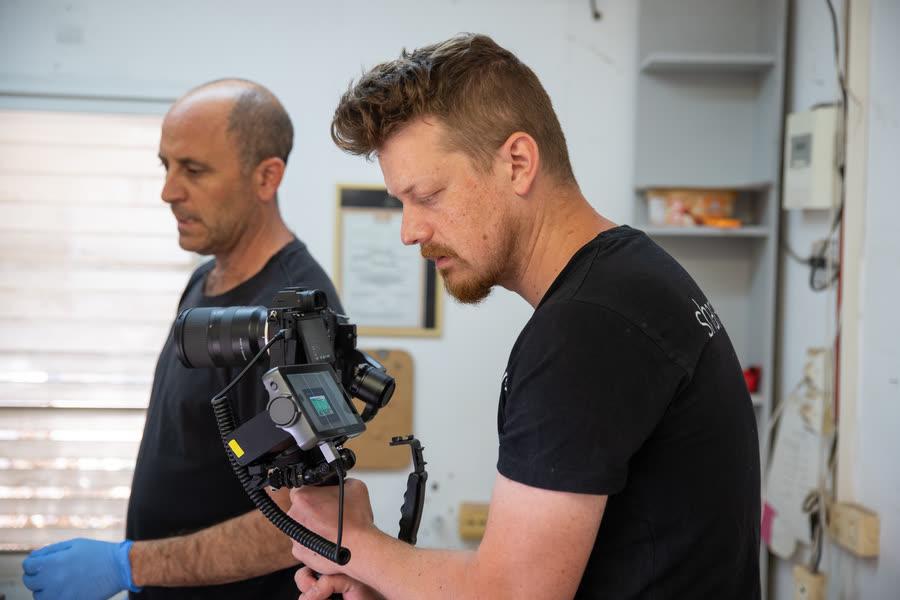
“How much does a video cost?” is usually the first question a business asks — and it is a fair one. The honest answer is that the price is driven almost entirely by what ends up on screen, and by what it takes to film it. Once you understand those components, a quote stops being a single number and becomes something you can read, compare and shape.
The seven things that set the price
1. The number of shoot days
The shoot day is the unit most budgets are built on, because it carries the crew, the equipment, the transport and often the location with it. More places, more people on camera and more complex scenes all push the day count up. The reverse is just as true: a well-planned day produces far more than most people expect — several short social films, for instance, shot back to back while the lighting is already set.
2. Crew size and equipment
A straightforward interview can be covered by a small team. A commercial with sculpted lighting, a moving camera, broadcast-quality sound and make-up cannot. Each addition — a dolly, a drone, cinema cameras — buys a specific effect on screen, and each is worth questioning: does this serve the story, or only the spec sheet?
3. Locations and set
Filming at your own offices or plant is usually the most economical option, and often the most authentic one. A studio or a special location adds a line to the budget, and so do set, props and styling — though sometimes those are precisely what makes a film memorable. It is a trade-off, not a rule.
4. People on screen
Your own employees and customers carry no casting cost, though they do need preparation and direction to look at ease on camera. Professional actors, models and presenters are a real line item, and their fees often come with usage rights limited by time or by channel — worth checking before a campaign runs longer than planned.
5. Animation, graphics and AI
Motion graphics, 3D animation and visualisation are priced in post-production hours, and they add up quickly. In the other direction, scenes that would otherwise demand travel, a built set or an effects budget can sometimes be produced with AI-assisted production instead, for a fraction of the shoot days. It genuinely depends on the scene: for someone talking to camera, or a real product in hand, filming is usually simpler and better. The right move is to compare both before committing.
6. Length and number of versions
A ninety-second film with three social cut-downs in two aspect ratios is not one deliverable — it is several. Each version needs its own edit, and often its own subtitles and graphics. Agreeing the full list of versions before the shoot is the easiest way to avoid a surprise later, because the framing can then be planned on set rather than rescued in the edit.
7. Music, voice-over and rights
Licensed library music, an original score, a professional voice artist and translation are each their own line. The detail that catches people out is usage rights: make sure they cover the way the video will actually be distributed — especially in paid media, where a licence that suits an organic post may not cover an ad.
How to read a quote
A good quote tells you what is included, not only what it costs. When you compare suppliers, check that each one answers the same questions:
- How many shoot days, and with what crew.
- Whether script and concept are included, or expected from you.
- How many rounds of revisions the edit covers.
- Which versions, at what lengths and in which aspect ratios.
- Music, voice-over, subtitles and translation.
- Usage rights for both the footage and the music.
- The timeline to final delivery.
Where to save without hurting the result
- Shoot more in a single day — plan several films that can share a crew, a location and a lighting set-up.
- Use your own people and places — usually more credible on screen, and less expensive.
- Decide the versions up front — a vertical crop planned on set costs nothing; recovering one in the edit costs plenty.
- Consolidate your feedback — one person collecting and approving notes saves entire rounds.
- Put the money into the idea — a strong idea carries a modest production. The reverse is rarely true.
The next step
The fastest route to a real number is a short conversation: what the video is for, where it will appear, and what it must include. From there a budget can be laid out with options — a core version and an extended one — so the decision is yours to make with the trade-offs visible. Start from Film & Content, or simply get in touch.